orWine Tastings in the Comfort of you own villa or B&B while on holiday in Tuscany or Liguria

To book an informative and fun wine tasting whilst holidaying in Italy or arrange for a wild food walk in your area contact me on tuscanytipple at libero dot it or check out my Facebook page

Total Pageviews

Showing posts with label food forest. Show all posts

Thursday, 19 September 2013

Planting Trees and Asparagus Bed

First of all apologies to all my blogging friends for not frequenting or commenting on their blogs, my internet connection is a little difficult what with us having no electricity where we are still camping in Rozovets, Bulgaria, being dependent on the good will of the local bar to re-charge the laptop, but the connection there being extremely slow.  Whilst when in the nearby provincial town the connection is faster, but I'm limited in time until my battery runs out again.  So here come the latest news from the Rozovets project:

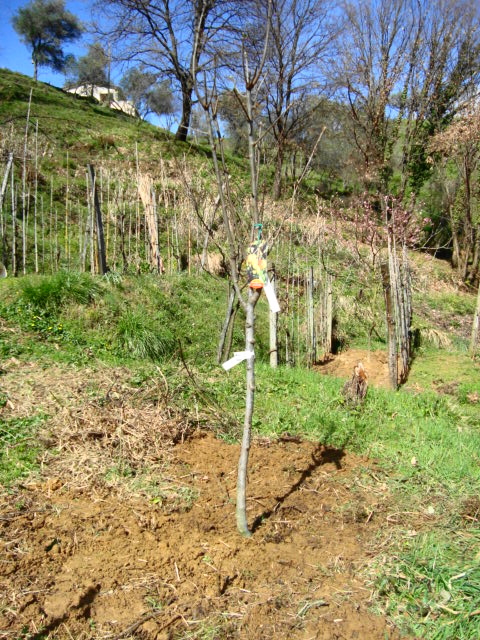
At the end of September we visited the plant sale at the Balkan Ecology Project in Shipka, about hour's drive north of us and purchased some plants for Vasko's land.  This is a great permaculture project run by an English family and their Bulgarian neighbours.  I might get around showing you some pics from there too some time soon.  Anyway, what we bought and subsequently planted is this:

A pea tree caragna brevispina.  This is a nitrogen fixing tree growing up to 20 metres high producing edible pea-like pods.  Although it grows quite tall, it is slender with light foliage and doesn't throw too much shade.

A Cornelian cherry cornus mas.  A shade tolerant shrub, small tree producing delicious cherry-like fruit.


A Japanese quince chaenomeles speciosa.  Another shade-tolerant shrub producing quince-like fruit.


Autumn olive elaeagnus umbellate.  A nitrogen fixing small tree producing delicious and nutritious berries in late autumn.


A sea buckthorn hippophae ramnoides. Another nitrogen fixing shrub which makes an excellent wind break and produces berries rich in vitamins and minerals.


2 chocolate vines akebia quinata.  A climber producing edible leaves and fruit.  The leaves make a good addition to the salad bowl, while the fruit has a delicate sweet flavour.  Can also be grown as a ground cover.


A dewberry rubus caesius.  A small shrub which functions as a ground cover in shady areas, producing small edible berries.


We also bought some asparagus plants, the variety being 'Washington'.  We've seen them in Shipka and they grow to an enormous size.  It was recommended to keep them indoors over the winter before planting them, but as we have nowhere to put them we chanced it and made a nice 'lasagne bed' for them on a sunny spot.  We put cardboard mulch down, topped by cow shit and finally a thick layer collected from the pine forest above of a mixture of pine needles and horse shit.  We lined the bed with bottles of wine mostly consumed by ourselves during our stay, but as you can see, we still have some way to go...


Finally in the medicinal herb bed the liquorice is doing well (also purchased at the plant sale).


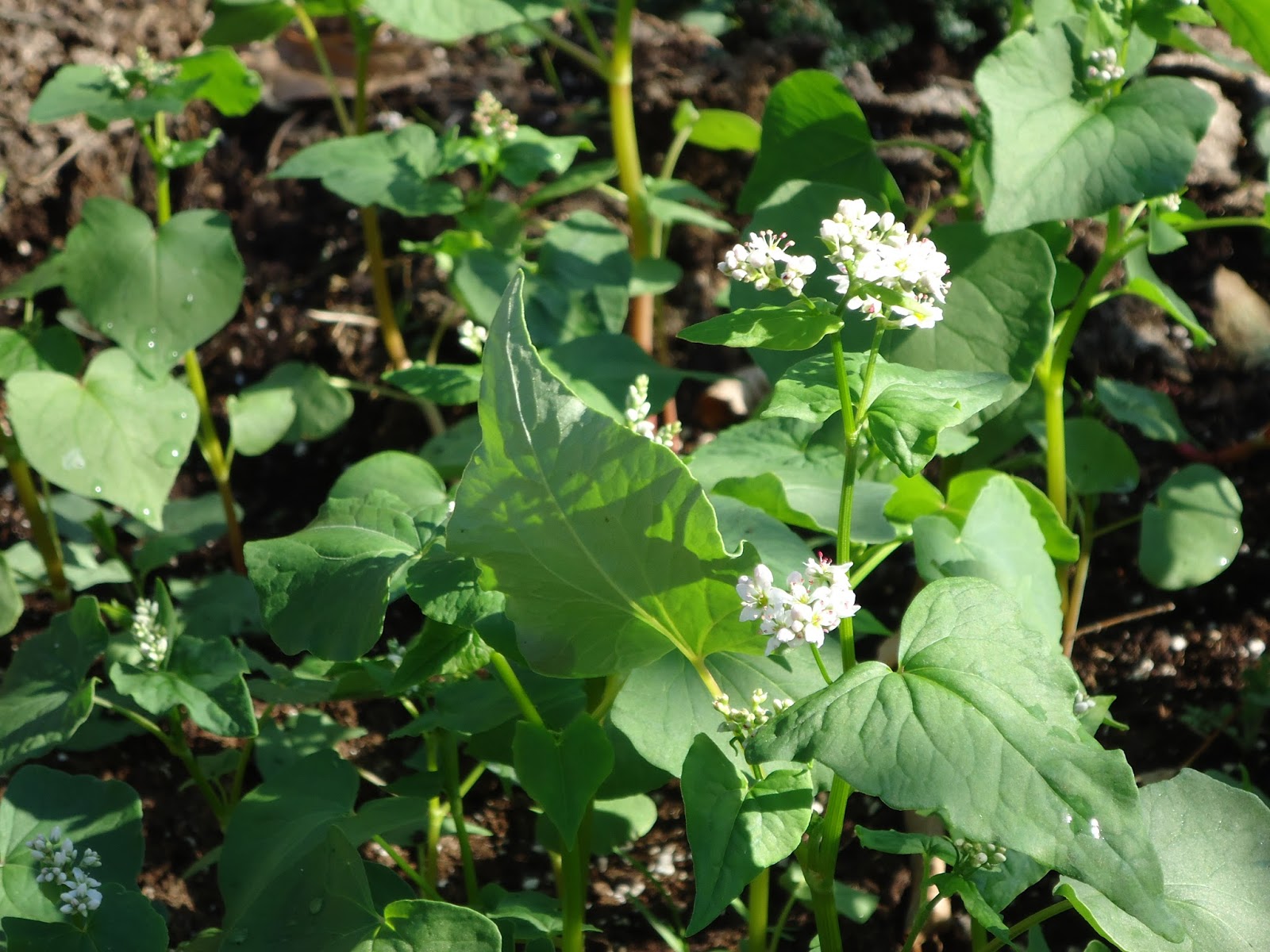
And the bits where we haven't planted anything in particular yet we have sown some green manure, such as in this case, buckwheat, which is growing rapidly and already in flower:


Sunday, 11 August 2013

Visiting Other Projects

While traveling around Europe recently we took the opportunity to visit a couple of other projects for new inspiration and connect with friends.  On our way to Bulgaria we took the scenic route via Hungary and visited my friend Kristina in the village of Nagyszékely (don't ask me how to pronounce it, the Hungarian language remains a closed book for me) some 70km south of Lake Balaton.


I know Kristina from my Permaculture Design Course in Italy and she shares her time between Budapest and this village, where she participates in the activities of a small community.  It is a very rural area in a gently hilly country and 10 families within the village have got together to form a small community bound by their common interest in permaculture.  It's not so much an eco-village, but a naturally grown community.  It now attracts visitors from all over Europe and other parts of Europe willing to experience their way of life.

Kristina works a great garden with a great bio-diversity, using techniques such as companion planting and mulching.  She also has a few beautifully creative elements such as this 'willow tent'.  From the outside it looks like an ordinary shrub...


...but if you creep in through the gap, you are in a wonderfully secluded shelter:


We also visited a few other members of the community.  My favourite one was a tour of a food forest by one of Kristina's neighbours (her name escapes me just now).
Around every corner, something new and productive turned up, a mixture of annuals and perennials, vegetables, fruit, herbs, grains.  Her enthusiasm was infectious and the forest truly inspiring.  I leave you with another few images:


This week we visited another project in Greece in the seaside town of Pefkohori in the Chalkidiki of Northern Greece by my blogger friend Mary.  She has followed my blog for some years, but unfortunately her English garden blog has been inactive for some time.  Nevertheless, we have stayed in contact and exchanged seeds.

The garden she works together with her parents has some big challenges.  For a start they don't have much money to spare.  The soil is very poor and near the sea (500m).  The summers are very dry.  Although they've had the property for 35 years, running water has only been installed 2 years ago and they still don't have electricity and for shelter they have a small self-built house.  So she has been experimenting a lot with drought resistant heirloom vegetables and they collect the little rainwater off their roof in a large storage tank.  Keeping ground-covering plants plants to improve the soil is difficult for them for two reasons: giving shelter to venomous snakes and fire hazard.  A wild fire last year only stopped 500 metres from the property, narrowly averting disaster.

Mary's elderly parents still very much enjoy working the land, the father usually busy with some project or other around the house, the mother watering the plants:

I love the way Mary experiments with different types of seeds.  Here she has sown sesame for seed production, which I never realised what a beautiful plant this is:

This is a really interesting long Chinese bean variety:

Also this year they started keeping rabbits for food production and chickens are planned for next year.  Mary made the cage herself from recycled materials:


After enjoying a few days of Greek hospitality and a few dips in the sea we returned to Bulgaria, more of which soon.  Thank you Kristina and Mary for your hospitality... :)

Tuesday, 19 March 2013

Forgive me Blogger for I have sinned...

It's been more than 2 months since my last confession...  I know there have been complaints for my lack of blog posts, I hope you haven't all abandoned me.  It's been a long, cold and wet winter.  We've had snow twice this winter (much enjoyed by Eddie the Beagle and his brother Full):


...and there have been at least 3 catastrophic rainfall events this winter, the last just this week with many landslides in the area.  Luckily there has been no major damage on our land, which shows we must have been doing something right.  Finally spring is showing signs of winning (almond blossoms):


and today we have been busy adding to the food forest.  On the soft fruit bed below the pond we planted 2 blackcurrants, 2 redcurrants and a white currant (all called John), 2 raspberries and a pink gooseberry:


The base of the bed is made up of my reverse Hugelkultur method, piling a load of old wood (mostly rotten oear and hazel prunings) on top of which we piled some soil from excavating the pond and some horse manure.  In between the fruit bushes I sowed some clover to add nitrogen to the bed, as they are quite nitrogen hungry.  The raspberries and the gooseberry are planted along the back of the bed as they prefer shady conditions in our climate.

Above the pond I planted Charity the mahonia "Charity".  She is particularly shade tolerant, doesn't mind poor soil conditions and produces edible berries:


Meanwhie down in the food forest we added Sally the service tree (sorbus domestica), which is a tall growing native tree producing small pear shaped fruit, some excellent wood and a strong root system.  She'll be the queen of the forest, once she grows up:


We also added two nitrogen-fixing plants: Mimi the mimosa, which attracts early pollinating insects with its profusion of yellow flowers in the spring (which according to some sources are also edible, although I find them bitter):


...and Gina the Tuscan broom, which also produces edible flower buds, has some medicinal properties, is useful for basketry and fixes soil, preventing landslides:


Not pictured is Jenny the self-fertile kiwi.  I'm hoping that she will shame Stud the male kiwi into getting the female hayward kiwis to produce!

Finally we added to the tree guilds around Jennifer the Rotello apple tree and Declan the winter pear.  Both had an artichoke added to their neighbourhood, which, apart from producing edible flower buds, makes a good ground cover and mulch. 


That's it for the moment folks.  I'll try not to leave such a large gap before the next post.  New ventures beckon for us and I'll keep you posted. :)