Although we don't have any pressing commitments most of the time we do try to stick to some sort of a routine every day, just to give our lives some structure. In the morning we wake up around 8ish. Sorry let me rephrase that: in the morning we get woken up by the cats around 8ish (if we are lucky).
Incidentally, if you've been wondering what's happened to our cats in the meantime, at the last count there were still 5 of them. We have refused any further applications for assylum and have turned back boats filled with cat refugees at sea to return back to Cat Land. Our original cat, Dot is only occasionally visiting now, there's far too much happening in the refugee camp for her liking. She's still cross that we've hung on to her daughter, who was supposed to have left home months ago! The daughter, Mickey, is most attached to us and is home most nights. I go out of the door last thing at night to call her in, and she comes running around some corner. Tigger, who arrived a few months ago as a skinny rake is gaining weight and looking well now. We're going to have to have her neutered next, she seems ready to send her kittens into the world. Luckily we have a friend who will do that for us, as we couldn't possibly afford it ourselves. Of her two kittens, Rooney (named because she has huge ears, just like the footballer) is the more friendly. She purrs happily and loudly if you only as much as look at her. Her brother or sister, we're still not sure yet, we aptly named Senna, because she is as fast as the Formula 1 driver. Apart from running away fast as soon as you move she counts eating as one of her hobbies. Despite the obvious energy consumption of running away a lot she/he seems to develop a double chin already!
Anyway, I digress. We start the day (after feeding the cats...) with a good breakfast, which is usually Susan's job to make: Juice, from our newly aquired juicer, muesli, wholemeal bread with homemade jam and coffee. If the cats get me up particularly early, Mickey will sit on my head purring, I will do the first part of the breakfast.
Next I will sit down on the computer to see if anyone's been sending me any messages or if there've been any other exciting news, while Susan clears up the kitchen from the night before. Unless there is then anything pressing to do, I'm quite happy to lounge about like that and read the on-line newspaper or so, but Susan tends to get ants in her pants roundabout then and says she needs to go out for a walk to wake up properly.
Today she went on a quite a short roundwalk, the weather was still beautiful and clear, and came back asking me what now? I've gone quite Italian when it comes to going for walks. I don't actually mind going for a walk, but I like it to have some purpose: going from A to B, i.e. to the shops, even if they are an hour or so away, discovering something new or, most importantly, foraging for wild food.
So off we went armed with a couple of bags and jars down the Via Francigena. Our village lies right on the pilgrim route from Canterbury to Rome as walked by Archbishop Segeric the Serious in 995 ad or so. Following this path we headded down the hill towards the nearby city of Sarzana.
Halfway down, I never cease to be surprised, as you leave some woods, on a rocky basalt outcrop, to come across the extensive castle ruins of the Castello della Brina.

Every year archeologists of Pisa university dig up a bit more of it. They are still not sure when the place was actually built. Written records go back to the 10th Century, but they have found items going back to Roman and even Etruscan times. It was destroyed in the 15th century, when it was a castle of the Bishop of nearby Luni. The attackers really bore a bit of a grudge, because they raised the place to the ground and toppled the round tower.

The rocky sub-soils on this hill provide a home for quite a unique flora, such as box, laurel, sloe, Aleppo pines and juniper. So today we were chiefly after juniper berries. In small quantities they are good used in pickles and cabbage dishes. However I'm after making a type of gin, juniper being the main ingredient of course (from Dutch Genever = juniper - short gin). Lacking a still it'll be more of a gin liqueur or 'gineprino' as they call it in Italy.

As we walked on we also found a whole handful of pine kernels, at least €10 worth I reckon. They are quite a pain to gather and even worse to then afterwards shell, but at €3 for some 30 grams or so, it's worth it. We still have a bit of basil growing on the land, so I can make an authentic pesto.

As we walked back I couldn't stop sniffing my fingers, which smelled gorgeously aromatic of juniper and pine resin. (that was until I had an itchy bottom and added a bit of an earthy note...)
In the end we walked all the way to Sarzana (1 3/4 hours if you don't gather anything), because we needed a couple of things from the shop. By the time we got back it was time to think of dinner, which is my job.


 If you are unlucky your shell will be empty, as happens with at least 50%
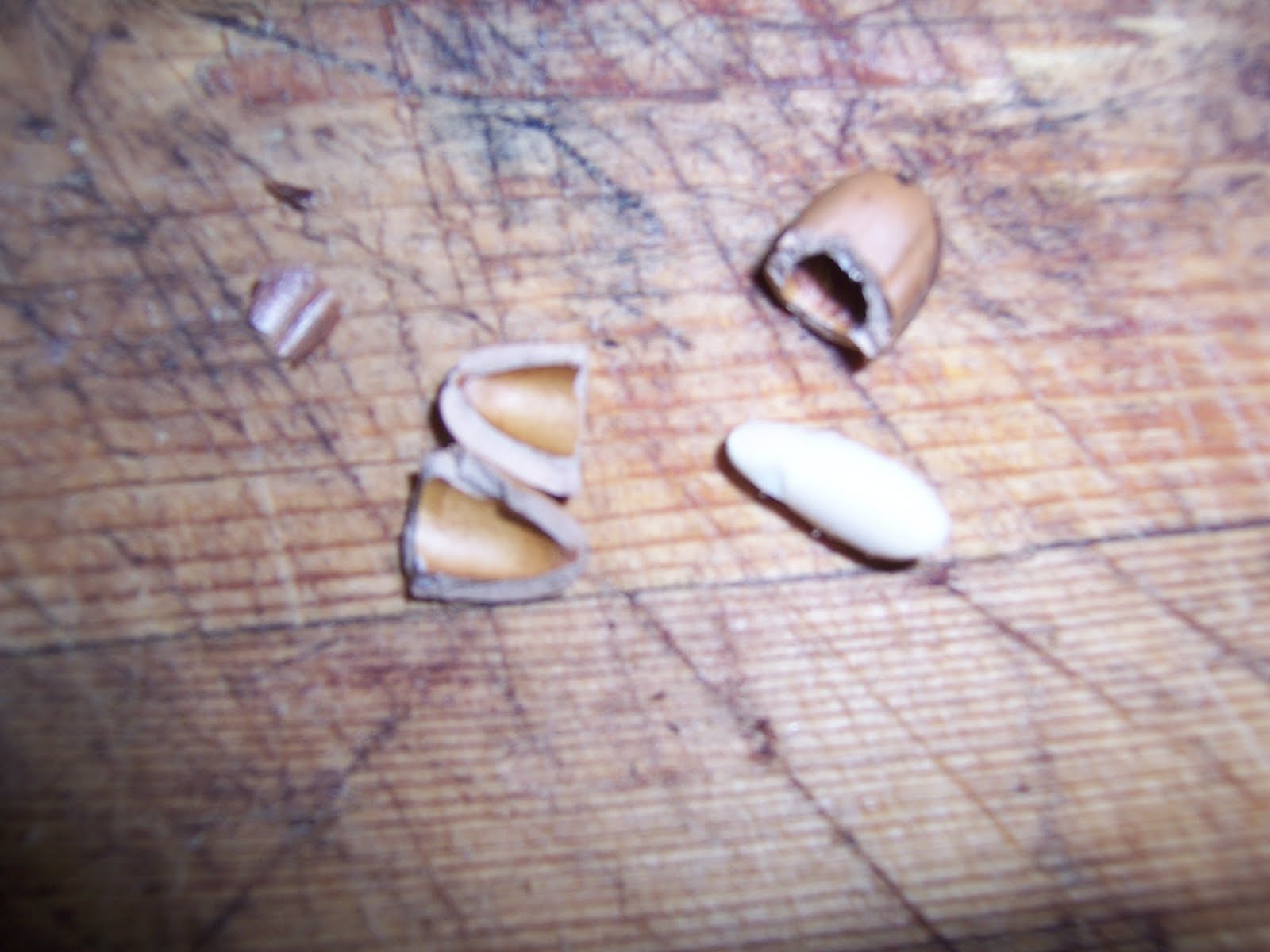 The shell is extremely tough so it took me the best part of an hour to just get a small handful. It explains why they are so expensive when you buy them in a shop, however, fresh like this they actually taste of pine resin and are really aromatic, unlike most shop bought varieties which only seem to add texture to your pesto.


